
£14.99
Instant digital download • Read on any device • Lifetime access
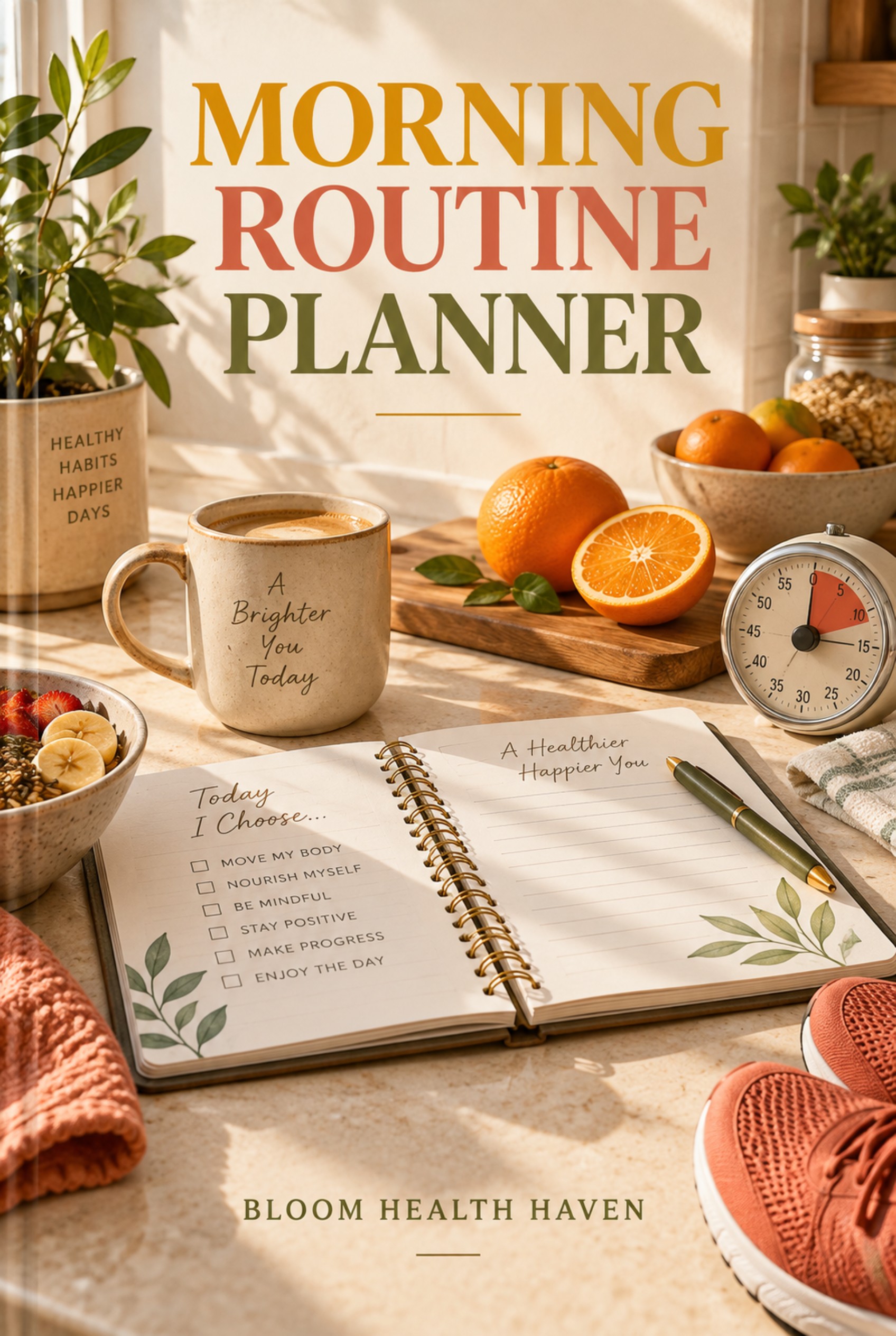
Design your ideal morning, build a routine that sticks, and track your consistency over 30 days. Instant digital download from Bloom Haven.
The alarm goes off, you reach for your phone, and forty scrolling minutes later the day is already running you. Now picture the alternative: you are up before the noise, unhurried, and the first hour belongs entirely to you. The Morning Routine Planner is the bridge between those two mornings: a structured way to design your ideal start, build it into a routine that sticks, and track your consistency across 30 days.
People who own their mornings have not discovered secret willpower; they have removed decisions. When the first hour is pre-planned, there is nothing to negotiate with yourself about at 6am. This planner walks you through that design process (what to include, what to drop, how long each element honestly takes) and then gives the routine a tracking structure so it survives past the first enthusiastic week. A consistent wake time also supports better sleep overall, as the NHS sleep and tiredness guidance explains.
Start embarrassingly small: a routine of fifteen minutes done daily beats ninety minutes done twice. Use the Morning Routine Planner to choose two or three anchor habits (water, movement, a few quiet minutes) and track them for the full 30 days before adding anything. Movement earns its place in almost every routine; even a brisk ten-minute walk counts towards the NHS physical activity guidelines. By the end of the month, the routine should feel less like effort and more like identity.
Snooze-button loyalists, parents grabbing a quiet hour before the household wakes, shift workers needing a repeatable anchor, and anyone whose evenings keep promising the mornings will be different. No 5am club membership required; the planner builds your best morning at whatever hour it starts.
A morning that runs itself, a calmer entry into every day, and proof (in your own handwriting) that you can keep promises to yourself. Find more daily-structure tools in our Lifestyle collection.
It starts the night before. The design worksheets include an evening shutdown element, because the morning is mostly decided by 10pm: clothes out, phone parked, first task named. The Morning Routine Planner treats the previous evening as the routine’s true starting line.
It plans for the bad days. Alongside your full routine, you will design a five-minute minimum version: the emergency morning for illness, late nights, and early trains. Keeping the streak alive on terrible days is what the 30-day tracker is quietly teaching.
It separates anchors from extras. Two or three anchor habits are protected; everything else is optional garnish. This single distinction in the Morning Routine Planner prevents the all-or-nothing collapse that ends most routine attempts by day nine.
It reviews weekly, not never. A short check-in page asks what dragged, what energised, and what the routine should drop. Routines that cannot evolve get abandoned; the Morning Routine Planner builds the evolution in.
It travels. Holidays, school breaks, and work trips get their own adaptation notes, so the routine bends rather than breaks. By the second month, most users report the strangest benefit of a settled morning: the Morning Routine Planner has quietly improved their evenings too, because days that start on purpose tend to end on time.
Weekends deserve their own answer, and the Morning Routine Planner gives them one: a softer Saturday variant that keeps the anchors and drops the schedule. Routines that ignore weekends fracture every five days; routines with a deliberate weekend mode roll through the month intact: same anchors, later start, no guilt attached.
Instant digital download from the Bloom Health Team.
📥 Instant digital download. No physical product will be shipped.
Created by Bloom Health Haven, drawing on over 20 years of healthcare, emotional wellbeing, and faith-informed support.

A calmer, happier you.
Eight printable planners for budgeting, meals, cleaning, chores, routines and weekly organisation. A simple home-management bundle for bringing more order to busy weeks. Buying these separately costs £119.92, so this bundle saves you £59.93.
£59.99

£14.99

£14.99

£14.99

£14.99

£14.99
* This digital guide is designed to support personal wellbeing and education and does not replace professional medical, therapeutic, or spiritual care.