
£14.99
Instant digital download • Read on any device • Lifetime access
Age-appropriate chore charts, star reward system, pocket money tracker, and family chore agreements. Instant digital download from Bloom Haven.
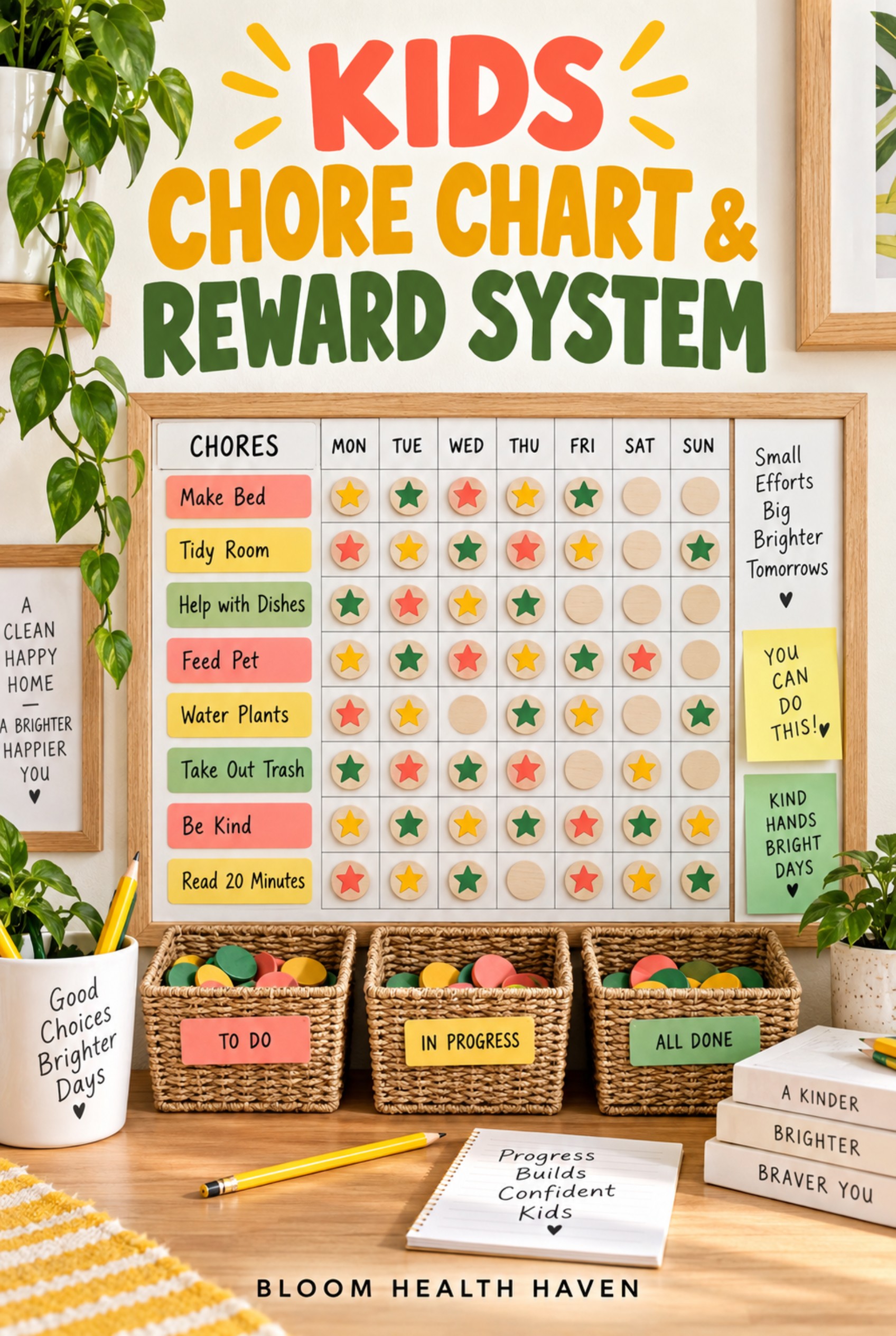
If getting your children to do basic chores involves negotiation worthy of a peace summit, followed by you doing it yourself anyway, this Kids Chore Chart & Reward System is the calm, visual fix. Age-appropriate chore charts, a star reward system, a pocket money tracker, and family chore agreements, all in one 68-page printable pack.
Children respond to what they can see: a chart on the fridge makes expectations concrete, progress visible, and rewards predictable. The repeated asking stops because the chart, not a parent, holds the standard. Just as usefully, regular responsibilities build competence and confidence, and family routines are one of the steadiest supports for children’s wellbeing, a theme running through the NHS Healthier Families resources.
Start with a ten-minute family meeting. Let each child help choose their chores from the age-appropriate lists (ownership is half the magic) then sign the agreement and stick the first chart somewhere unmissable. Stars go on immediately when a chore is done; rewards arrive exactly as promised. Consistency in week one and two is what makes the Kids Chore Chart & Reward System self-sustaining by week three, when checking the chart becomes the habit.
Parents of children roughly 3 to 14, blended households juggling different ages, and any family where chores have become a daily friction point. It also adapts neatly for screen-time rewards if pocket money is not your approach. On that subject, Internet Matters is an excellent companion for balancing rewards with healthy screen habits.
Fewer reminders, calmer mornings, and children quietly proud of full star rows. The deeper win is long-term: kids who connect contribution with reward carry that wiring into adulthood. More family printables live in our Family collection.
What ages does it really work for? The Kids Chore Chart & Reward System includes charts pitched at roughly three bands (little helpers, primary-age children, and teens) with task lists that grow in responsibility. Three-year-olds put toys in baskets; thirteen-year-olds run their own laundry. The system flexes across a decade of childhood.
Stars or pocket money. Which should we use? Either, or both in sequence. Many families run the Kids Chore Chart & Reward System on stars alone for younger children, then connect stars to the pocket money tracker as money sense develops. The agreements page records whatever deal your family strikes.
What stops the novelty wearing off? Reprintability, honestly. A fresh chart each week keeps the ritual alive, and rotating chores prevents the boredom that kills most systems by half-term. Families who pair chart-refresh with Sunday evening planning report the longest streaks.
What about children who simply refuse? The family agreement is the quiet powerhouse of the Kids Chore Chart & Reward System: chores chosen together and signed for are notably harder to strike against than chores imposed. Persistent refusal usually signals tasks pitched at the wrong age band. Adjust down a level and rebuild from easy wins.
Print requirements? Any home printer, black-and-white friendly, though the colour star charts do earn their ink in younger households.
Timing the launch helps more than parents expect. The Kids Chore Chart & Reward System lands best at a natural reset point (the first weekend of a school term, the start of a month, even the day after a birthday) when children already sense a new chapter beginning. Mid-chaos launches work too; they just benefit from an extra week of cheerful consistency before the system feels like furniture.
Instant digital download from the Bloom Health Team.
📥 Instant digital download. No physical product will be shipped.
Created by Bloom Health Haven, drawing on over 20 years of healthcare, emotional wellbeing, and faith-informed support.
* This digital guide is designed to support personal wellbeing and education and does not replace professional medical, therapeutic, or spiritual care.